Minimally Invasive Diagnosis. Direct Visualization.
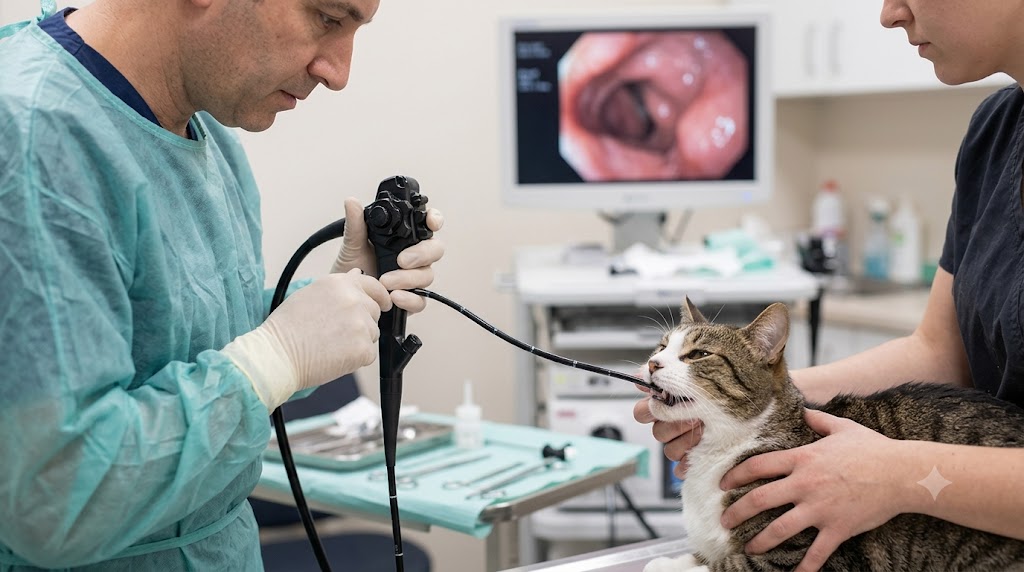
Endoscopy allows our specialists to directly examine areas inside the body using a small camera without the need for invasive surgery.
At West Texas Veterinary Specialist, endoscopy can be used to evaluate the gastrointestinal tract, respiratory system, nasal passages, and lower urinary tract, allowing direct visualization of abnormalities and collection of targeted diagnostic samples when appropriate.
For many patients, endoscopy provides valuable diagnostic information while minimizing tissue trauma and allowing them to return home the same day.
What is Endoscopy?
Endoscopy uses specialized flexible or rigid cameras to directly visualize internal structures that otherwise cannot be examined without more invasive procedures.
Unlike imaging tests that evaluate organs from outside the body, endoscopy allows the specialist to see the surface of abnormal tissue directly and obtain targeted biopsy or other diagnostic samples during the same procedure.
In selected cases, endoscopy can also be therapeutic—for example, allowing retrieval of certain foreign objects without traditional surgery.
Endoscopic Procedures
The type of endoscopy performed depends on the patient’s clinical signs and the area being evaluated.
Gastrointestinal Endoscopy
Upper gastrointestinal endoscopy allows evaluation of the esophagus, stomach, and upper small intestine, while colonoscopy evaluates the colon and often the lower small intestinal tract.
These procedures may be recommended for patients with vomiting or diarrhea, difficulty swallowing, gastrointestinal bleeding, unexplained weight loss, suspected inflammatory or infiltrative disease, or certain foreign bodies.
Targeted tissue biopsies can be collected during the procedure when appropriate.
Rhinoscopy
Rhinoscopy allows direct examination of the nasal passages and may be recommended for patients with chronic nasal discharge, nosebleeds, sneezing, suspected nasal foreign material, or other signs of nasal disease.
Diagnostic samples can be obtained from an abnormal area when indicated.
Bronchoscopy
Bronchoscopy allows direct visualization of the trachea and lower airways.
It may be used to investigate chronic cough, unexplained respiratory disease, airway abnormalities, or suspected inflammatory, infectious, or structural airway disease. Bronchoalveolar lavage and other diagnostic samples can also be collected during the procedure.
Urethrocystoscopy
Urethrocystoscopy allows direct examination of the urethra, urinary bladder, vaginal cavity, and related lower urinary tract structures.
It may be useful in selected patients with recurrent or unexplained urinary signs, suspected structural abnormalities, abnormal tissue, or other lower urinary tract disorders.
Why Specialist – Performed Endoscopy Matters
Endoscopy is more than inserting a camera and obtaining images.
The specialist performing the procedure makes real-time decisions about which abnormalities are clinically meaningful, where biopsies or other samples should be obtained, whether additional areas require examination, and how the findings relate to the patient’s overall condition.
At West Texas Veterinary Specialist, endoscopic procedures are performed by a board-certified internal medicine specialist and are integrated with the patient’s history, physical examination, laboratory results, diagnostic imaging, and other findings.
Kirk Sears, DVM, DACVIM (SAIM), brings advanced training in complex medical disease together with extensive experience in endoscopic procedures, allowing the procedure and its findings to become part of a comprehensive specialist-derived diagnostic plan rather than an isolated test.
Diagnostic & Therapeutic Capabilities
Depending on the procedure and patient’s condition, endoscopy allows:
- Direct visualization of internal structures
- Targeted tissue biopsy
- Cytology and other diagnostic sample collection
- Bronchoalveolar lavage
- Retrieval of selected foreign bodies
- Evaluation of structural abnormalities
One of the important advantages of endoscopy is that visualization and diagnostic sampling can often be performed during the same procedure without the need for traditional exploratory surgery.
What to Expect
Endoscopic procedures require general anesthesia to allow safe and thorough examination.
Preparation depends on the type of procedure being performed. Gastrointestinal endoscopy typically requires fasting, while colonoscopy may require additional bowel preparation. Our team will provide specific instructions based on your pet’s procedure.
Almost all patients undergoing endoscopy at West Texas Veterinary Specialist return home the same day following appropriate recovery from anesthesia.
Our Collaborative Approach
West Texas Veterinary Specialist is a referral-only outpatient specialty center.
Patients may be referred specifically for an endoscopic procedure, or endoscopy may be recommended as part of a broader Internal Medicine evaluation.
Procedure findings, diagnostic samples, and recommendations are communicated to the referring veterinarian so they can be incorporated into the patient’s ongoing diagnostic and treatment plan.
Frequently Asked Questions
Please use an accordion/expand-and-collapse format for this section.
Why might my pet need endoscopy?
Endoscopy may be recommended when direct visualization or biopsy of the gastrointestinal tract, respiratory system, nasal passages, or lower urinary tract could help diagnose a medical condition.
The appropriate type of endoscopy depends on your pet’s symptoms and the area being investigated.
What is the advantage of endoscopy compared with surgery?
Endoscopy allows certain internal structures to be examined and biopsied without making a traditional surgical incision.
For appropriately selected conditions, this can reduce tissue trauma and recovery time while still providing valuable diagnostic information.
Can biopsies be taken during endoscopy?
Yes. One of the major advantages of endoscopy is the ability to directly visualize abnormal tissue and obtain targeted biopsy or other diagnostic samples during the procedure.
Can endoscopy be used to remove a foreign object?
In selected cases, yes. Certain foreign objects within accessible portions of the gastrointestinal tract, respiratory tract, or other areas may be retrievable endoscopically, avoiding traditional surgery.
Whether this is possible depends on the location, size, shape, and nature of the object and the patient’s condition.
Will my pet need anesthesia?
Yes. Endoscopic procedures require general anesthesia so the examination can be performed safely and thoroughly.
Will my pet stay overnight?
Almost all patients undergoing endoscopy at West Texas Veterinary Specialist return home the same day after appropriate recovery from anesthesia.
How will I receive the results?
Initial endoscopic findings can often be identified at the time of the procedure. When biopsies or other samples are submitted for laboratory analysis, final results will take additional time.
Findings and recommendations are communicated to your referring veterinarian and incorporated into your pet’s diagnostic and treatment plan.
Ready To Refer A Patient?
If your veterinarian has recommended endoscopy or specialty evaluation, our team is here to help coordinate your pet’s referral.